


- Presentation of the socio-economic impact and efficient use of water in Andalusia
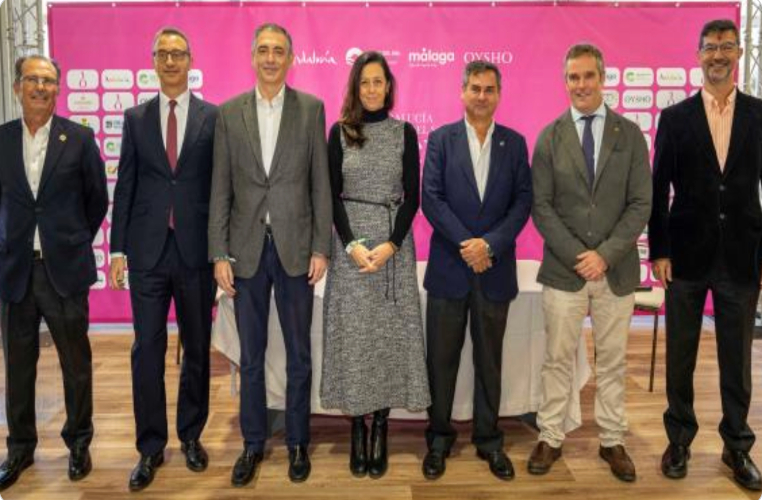
The Real Guadalhorce Golf Club, venue for the Andalucía Costa del Sol Open de España by Oysho, hosted a key event for the golf sector entitled “Golf in Andalusia: socio-economic impact and efficient use of water,” jointly organised by the Spanish Association of Golf Courses (AECG) and the Royal Andalusian Golf Federation (RFGA), which highlighted golf tourism in Andalusia as an engine of wealth, employment, tourism and sustainability.
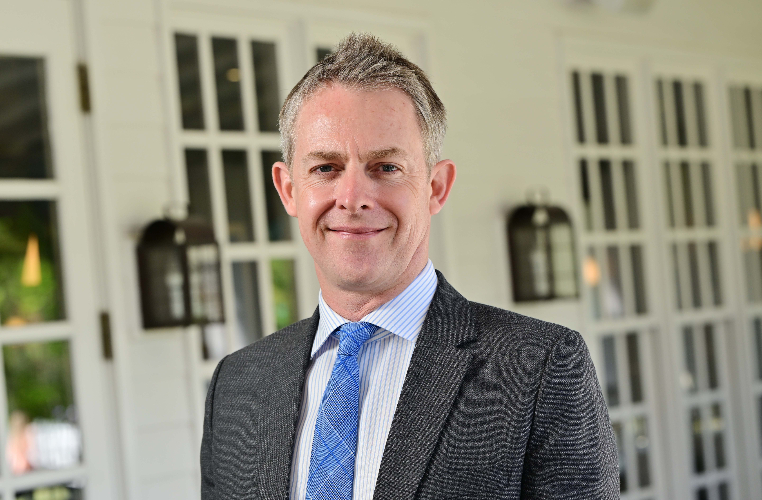
The day, opened with a welcome address by the president of the Real Guadalhorce Golf Club, Ángel Gancedo, began with a speech by the president of the Royal Andalusian Golf Federation, Pablo Mansilla, who reaffirmed that Andalusian golf is one of the most solid, competitive and deseasonalizing tourism sectors in the country, as reflected in the study carried out by IE University ‘Economic Impact of Golf in Spain’.
Interesting facts include that Andalusia receives more than 700,000 golf tourists each year, a figure that makes the region the number one destination in Southern Europe. This influx of international visitors has a direct economic impact on hotels, restaurants, shops, transport, and leisure businesses, generating over €2 billion in direct revenue from golf tourism. Eighty-seven percent of this revenue benefits businesses other than golf courses, creating a business volume exceeding €5.4 billion annually (indirect and induced effects) and supporting more than 50,000 jobs.
During his speech, the president of the Royal Andalusian Golf Federation, Pablo Mansilla, highlighted that golf “contributes decisively to the deseasonalization of tourism and the strengthening of the Andalusian business fabric,” noting that this sport attracts a visitor with high average spending whose stay benefits multiple sectors beyond the course itself.
One of the central themes of the day was the presentation by its author, Juan Antonio López, Professor of Environmental Technologies at the University of Cádiz, of the study ‘Golf and Water. Report on Spanish golf courses and their relationship with water’, which reveals data that breaks myths and confirms the efficiency of the sector: golf courses occupy only 0.3% of the irrigated surface of Andalusia and use only 0.2% of the conventional water destined for agricultural irrigation.
Furthermore, Andalusia is now a European benchmark in the use of reclaimed water, with golf courses being pioneers in sustainability through the implementation of intelligent irrigation systems and management models that maximise water efficiency, planting of grasses that require less irrigation, water self-sufficiency, etc.
In the institutional section, the round table, moderated by Carlos Pitarch , vice president of the Spanish Association of Golf Courses and president of the Environment Committee of the RFGA, brought together officials from the regional administration and the main water management entities in Malaga: the general secretary of water of the Ministry of Agriculture, Fisheries, Water and Rural Development of the Junta de Andalucía , Ramiro Angulo ; the CEO of ACOSOL , Matilde Mancha ; and the general director of EMASA , Juan José Denis .
In the words of Ramiro Angulo, “Andalusia discharges 400 cubic hectometers of treated wastewater into the sea, and the Regional Government intends to reach the regeneration and reuse of 250 cubic hectometers. The objective is to incorporate non-conventional water sources, particularly reclaimed water, to provide greater security for all economic sectors. In this regard, dialogue between the primary sector, industry, and tourism, and the various public administrations, is essential. Furthermore, it is important to note that some investments of general interest can be made with European funding.”
Matilde Mancha, CEO of ACOSOL, pioneers in supplying reclaimed water to golf courses, pointed out that “although the long-term objective on the Costa del Sol is the comprehensive sanitation plan, the viable solution in the meantime is the incorporation of the sleeves thanks to which conductivity is being reduced, so ACOSOL plans to incorporate them along 20 km of coastline.”
According to EMASA’s CEO, Juan José Denis, “the expansion of the Guadalhorce wastewater treatment plant’s tertiary treatment system, together with the Peñón del Cuervo tertiary treatment system, will provide agriculture, golf tourism, and industry with a new water source that guarantees employment and wealth creation.”
During the debate, the need to continue developing infrastructure that allows for the expanded use of reclaimed water and ensures a stable supply for a sector that offers an extraordinary economic return was highlighted. Both the Andalusian Regional Government and the entities responsible for the integrated water cycle agreed that golf is proving to be an ally in terms of efficiency and adaptation to climate change.
The day concluded with a clear idea shared by all the speakers: Andalusian golf is a highly profitable economic activity, generating stable employment and promoting quality tourism that benefits the entire territory.
And it does so—as the organisation itself pointed out—using a minimal amount of water compared to the return it generates. Therefore, it emphasised the need to prioritise investments in water regeneration and transport infrastructure to move towards a fully circular model.